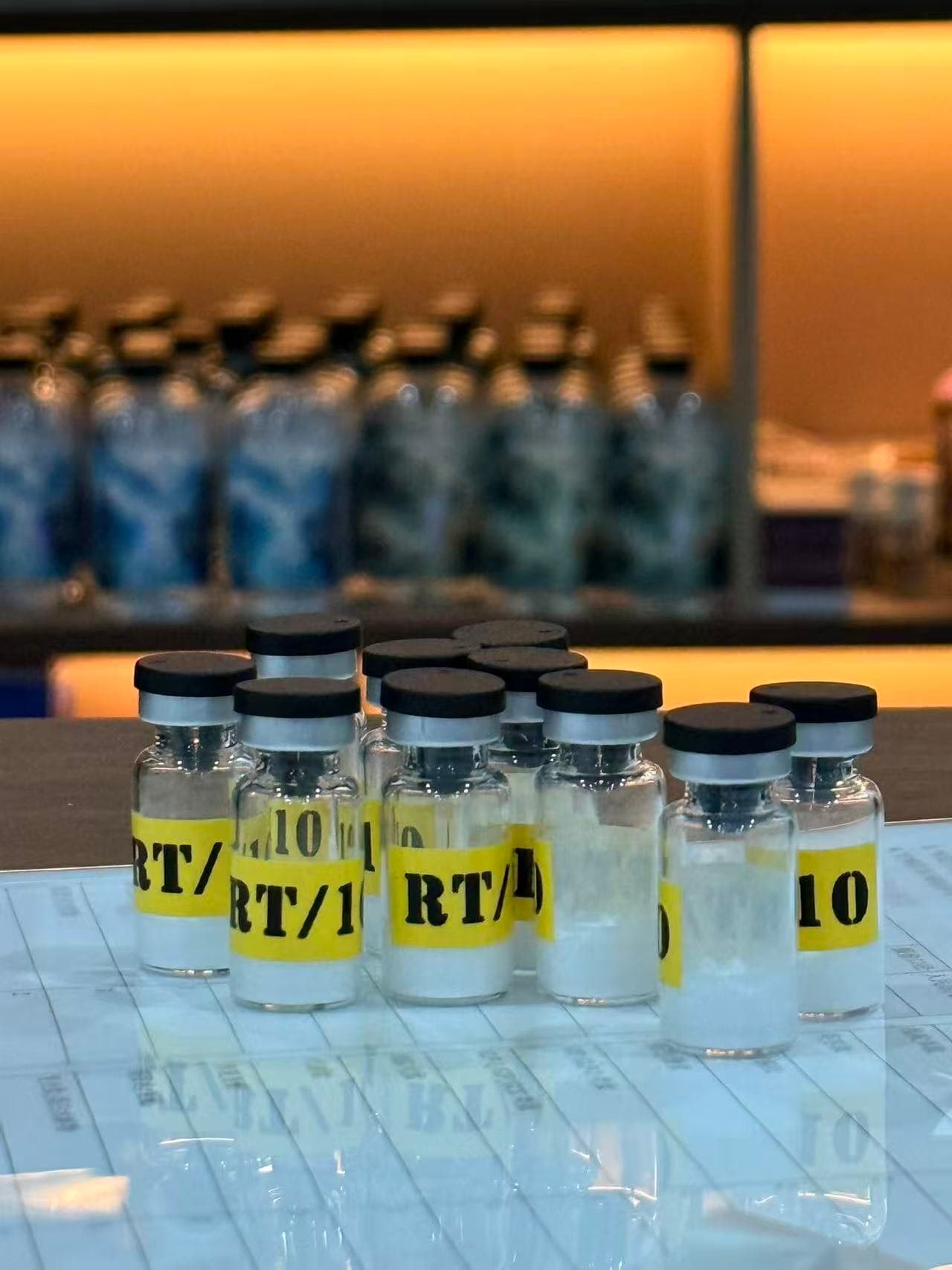
For Research Labs & CROs
Peptides built for rigorous research, sequence-verified, stability-tested, scale-flexible.
Research-lab peptide procurement runs on analytical depth and supply continuity. PeptideXpo supplies custom-synthesized peptides at µg-to-kg scale with ≥99.0% HPLC purity, ESI mass spec, LC-MS/MS sequence verification, and on-request stability studies. The catalog covers 90+ research peptides spanning GLP-1, repair, GH-axis, cognitive, immune, cosmetic, mitochondrial, and longevity classes. Custom sequences ship from confirmed PO in 4-8 weeks for first-time runs and 10-14 days for repeat orders.

Why research labs choose PeptideXpo
Analytical depth that survives peer review, not just procurement.
Sequence verification by LC-MS/MS on every batch for peptides above 15 residues, recommended at first-time supplier qualification and standard on our release packet for the longer peptide classes (Tirzepatide, Retatrutide, TB-500, ARA-290, LL-37, Thymosin Alpha-1). Mass-spec alone confirms identity to within 0.5 Da, but tandem MS sequence verification directly demonstrates the synthesized sequence matches the labelled sequence at the residue level. For methods sections in peer-reviewed publications, that's the analytical depth that survives.
Custom sequence synthesis from µg to kg scale. New-sequence development workflow: RFQ → NDA → quote → pilot synthesis (typically 100-500 mg gram-scale) → buyer-side validation → commercial-scale production. Pilot-stage MOQ for custom sequences is 5-10 g of bulk material; commercial-scale MOQ varies by sequence complexity. Non-standard modifications (PEG conjugation, lipidation, copper coordination, D-amino-acid incorporation, intramolecular disulfide bridging) are routine.
Stability data on request, both accelerated (40°C/75% RH) and real-time (25°C/60% RH) protocols. Stability is typically generated on demand rather than included by default, because the cost-vs-need balance is workflow-specific. For in vivo research, we recommend the LAL endotoxin test plus microbial limits on the specific batch (USP <85> and USP <61>/<62>), these are add-ons rather than default release tests because cell-culture-only workflows generally don't need them.
Academic and CRO pricing is reviewed on a case-by-case basis. Recurring research procurement against an established synthesis route compresses pricing to commercial-scale economics even at modest order volumes, discuss the procurement schedule at quote stage so we can match the pricing model to your lab's purchase cadence.

Custom synthesis from sequence
HPLC + MS analytical packets
Stability data (accelerated + long term)
Academic / non-profit pricing on request
Regions served: Global
Curated catalog
Research-grade catalog
The 90+ peptides most commonly procured by academic, CRO, and biotech research labs in our buyer base, across GLP-1, repair, GH-axis, cognitive, immune, cosmetic, mitochondrial, and longevity classes.
Tirzepatide
≥99.0%GIP / GLP-1 dual receptor agonist
- CAS
- 2023788-19-2
- Vial
- 2 mg–120 mg
Retatrutide
≥99.0%GIP / GLP-1 / glucagon tri-agonist
- CAS
- 2381089-83-2
- Vial
- 5 mg–60 mg
Semaglutide
≥99.0%GLP-1 receptor agonist
- CAS
- 910463-68-2
- Vial
- 2 mg–50 mg
Cagrilintide
≥99.0%Long-acting amylin analog
- CAS
- 1415456-99-3
- Vial
- 2 mg–10 mg
15-mer
BPC-157
≥99.0%Body Protection Compound 15-mer
- CAS
- 137525-51-0
- Vial
- 2 mg–10 mg
43-mer
TB-500
≥99.0%Thymosin β4 fragment
- CAS
- 885340-08-9
- Vial
- 2 mg–10 mg
3-mer
GHK-Cu
≥99.0%Copper tripeptide-1
- CAS
- 89030-95-5
- Vial
- 50 mg · 100 mg
4-mer
Epitalon
≥99.0%Pineal gland tetrapeptide
- CAS
- 307297-39-8
- Vial
- 10 mg · 50 mg
Frequently asked
Common questions from research & cros.
Do you supply custom-synthesized peptides from buyer-provided sequences?
Yes. Custom sequence synthesis covers µg to kg scale, with non-standard modifications including PEG conjugation, fatty-acid lipidation, copper coordination, D-amino-acid incorporation, intramolecular disulfide bridging, and N/C-terminal modifications (acetyl, amide, biotin, etc.). The workflow runs: NDA + quote (1-3 days) → pilot synthesis at 100-500 mg gram-scale (4-6 weeks) → buyer validation → commercial-scale production (4-8 weeks). For sequences your lab has worked with previously, we can skip the pilot stage and run directly at commercial scale.
What's included in the standard research-grade analytical packet?
Standard release packet: batch-specific COA, HPLC chromatogram with peak integration showing ≥99.0% purity, ESI mass spec confirming molecular weight within 0.5 Da of theoretical, water content by Karl Fischer titration, counter-ion identification (acetate by default), and residual-solvent screening per pharmacopeia limits. For peptides above 15 residues, sequence verification by LC-MS/MS is included. Add-on tests on request: bacterial endotoxin (LAL per USP <85>) for in vivo workflows, microbial limits (USP <61>/<62>), stability data (accelerated and/or real-time), and bioactivity confirmation (where appropriate to the molecule).
What's the typical lead time for a research-lab order at typical aliquot scale?
For catalog research peptides at standard fill sizes (2-15 mg lyophilized vials), inventory-held SKUs ship in 5-10 business days from confirmed PO. Made-to-order catalog SKUs run 14-21 days. Custom-synthesized sequences run 4-8 weeks for first-time orders and 10-14 days for repeat orders against an established synthesis route. Expedited lead time is available at a 30-50% premium when production needs to be sequenced into existing schedule. For procurement workflows planning multiple experiments, ordering against forecast against an established route is the most lead-time-efficient pattern.
Do you support academic and non-profit research pricing?
Yes. Academic, government-laboratory, and non-profit research pricing is reviewed case-by-case at quote stage. The pricing model typically reflects the buyer's order frequency and total annual volume rather than a uniform discount; small but recurring orders may price better than large one-off purchases because the procurement-economics advantage of recurring scheduling outweighs the per-batch volume premium. Discuss your lab's procurement profile at quote stage so we can match the pricing approach to your purchase cadence.
Can you supply non-standard salt forms or modified counter-ions on request?
Yes. Acetate is the default counter-ion across the catalog because it's the pharmaceutically and analytically preferred form for most downstream research and clinical workflows. TFA-salt material is available on explicit request for the narrow research workflows that need it (some structural-biology purification workflows, specific receptor-pharmacology studies where TFA is a known variable). Other counter-ions (mesylate, hydrochloride, citrate, sulfate) are available through the OEM service for buyers with specific formulation requirements. Specify the counter-ion at quote stage; the released-batch COA always reports the explicit counter-ion identification.
Related reading
Insights relevant to research & cros procurement.
Let's talk peptides.
First response under 12 hours · Catalog · Sample COA · MOQ · Lead time. Our regulatory and sales teams review every inquiry before pricing.